Staceys Auction

Catalogue

Wed 27th May 2026: 27052026

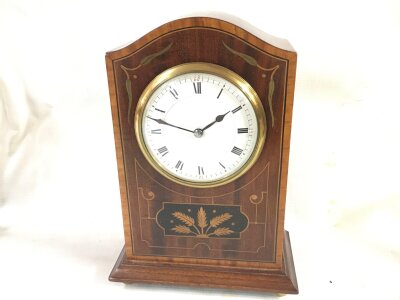
An Edwardian mantle clock. 23cm tall 17cm wide

An Edwardian mantle clock. 23cm tall 17cm wide

Lot number: 1504

Est: £60 - £100

View lot
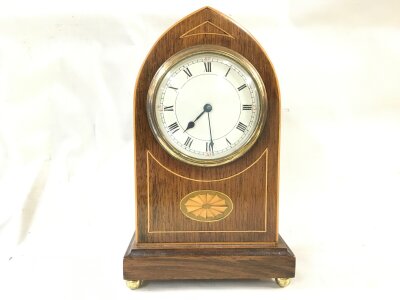
An Edwardian mantle clock 24cm tall 14cm wide

An Edwardian mantle clock 24cm tall 14cm wide

Lot number: 1505

Est: £40 - £60

View lot
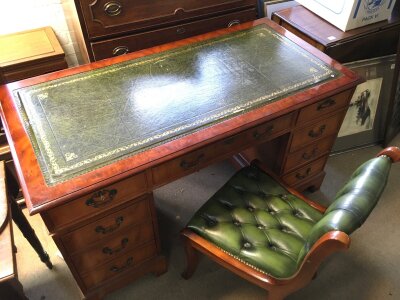
A reproduction yew wood desk and chair , 136cm wide , 69cm long 78cm tall

A reproduction yew wood desk and chair , 136cm wide , 69cm long 78cm tall

Lot number: 1506

Est: £50 - £100

View lot
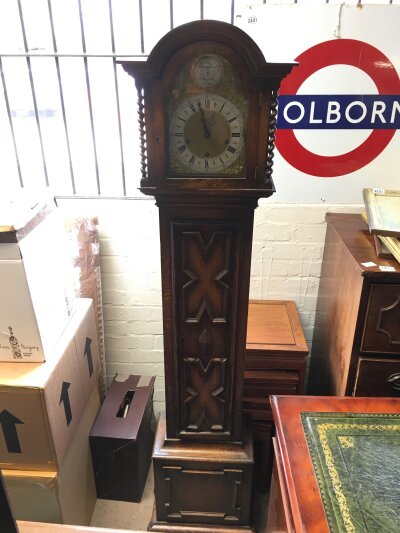
An oak grandmother clock, 166cm tall

An oak grandmother clock, 166cm tall

Lot number: 1507

Est: £80 - £120

View lot
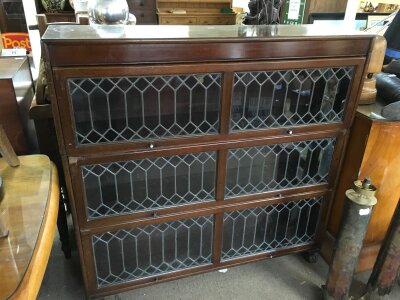
A bookcase globe wernike style. In need of restoration 128cm wide 30cm long 128cm tall

A bookcase globe wernike style. In need of restoration 128cm wide 30cm long 128cm tall

Lot number: 1508

Est: £100 - £200

View lot
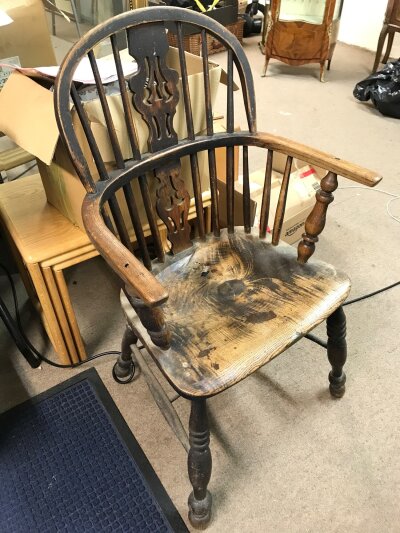
A 19th century Windsor chair 96cm tall 57cm wide

A 19th century Windsor chair 96cm tall 57cm wide

Lot number: 1511

Est: £100 - £150

View lot
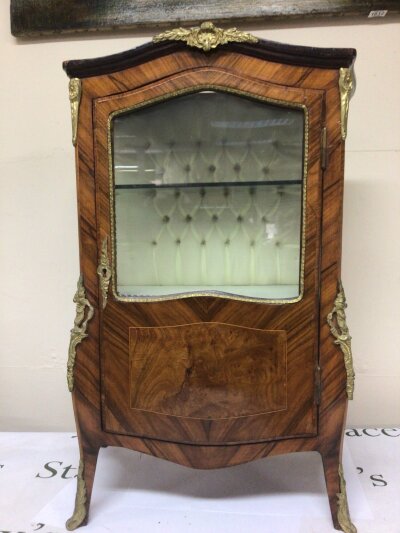
A French walnut petite cabinet with a lined interior and applied gilt metal mounts. Height 75cm width 45 cm

A French walnut petite cabinet with a lined interior and applied gilt metal mounts. Height 75cm width 45 cm

Lot number: 1512

Est: £150 - £300

View lot
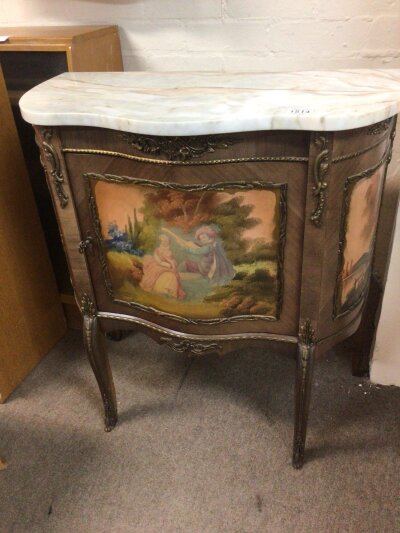
A French Louis XVI style cabinet with a marble top and painted panels in the manor of Jean Honore Fragonard. Length 72cm height 78cm

A French Louis XVI style cabinet with a marble top and painted panels in the manor of Jean Honore Fragonard. Length 72cm height 78cm

Lot number: 1514

Est: £100 - £150

View lot
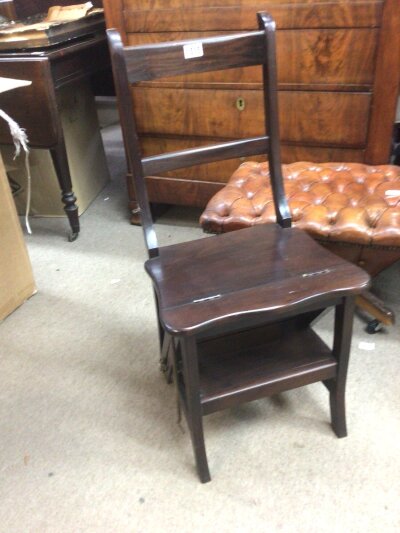
A beechwood reproduction metamorphic Library seat folding into a set of steps.

A beechwood reproduction metamorphic Library seat folding into a set of steps.

Lot number: 1515

Est: £40 - £60

View lot
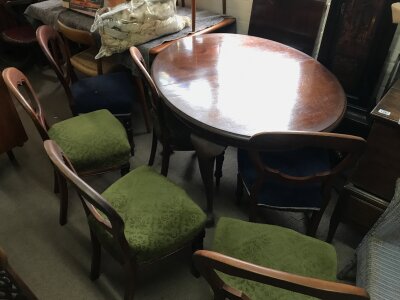
A mahogany extendable oval dining table featuring cabriole legs and chairs. 126cm wide

A mahogany extendable oval dining table featuring cabriole legs and chairs. 126cm wide

Lot number: 1516

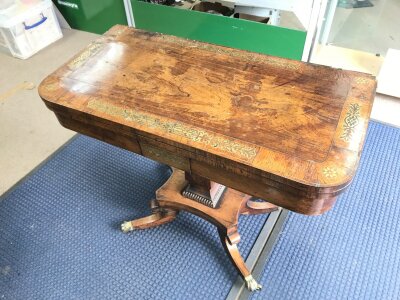
A rosewood veneered card table with brass inlay. In need of restoration. 73cm tall 90cm wide 45cm long

A rosewood veneered card table with brass inlay. In need of restoration. 73cm tall 90cm wide 45cm long

Lot number: 1517

Est: £200 - £300

View lot

A 20th century wall mirror with peach glass edges and floral pattern

A 20th century wall mirror with peach glass edges and floral pattern

Lot number: 1518

Est: £30 - £50

View lot
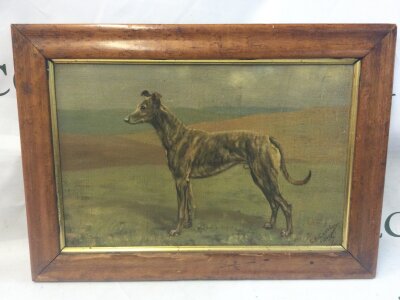
A G.A Cattley framed oil on board painting, Greyhound dated 1943. Frame 42x30cm, picture 33x22cm

A G.A Cattley framed oil on board painting, Greyhound dated 1943. Frame 42x30cm, picture 33x22cm

Lot number: 1601

Est: £100 - £150

View lot
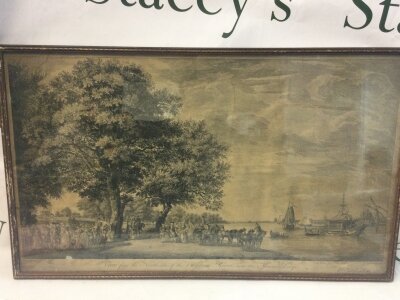
A Virginia water etching- View from the Northside of the Virginia River near the Manour Lodge. Frame 60x36cm

A Virginia water etching- View from the Northside of the Virginia River near the Manour Lodge. Frame 60x36cm

Lot number: 1602

Est: £40 - £80

View lot
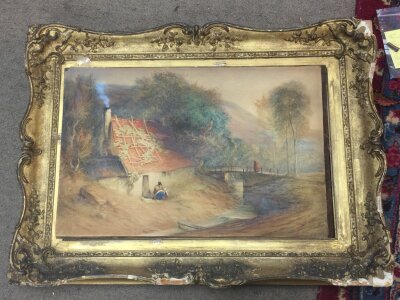
An unsigned Victorian watercolour village view, framing in need of restoration

An unsigned Victorian watercolour village view, framing in need of restoration

Lot number: 1603

Est: £60 - £100

View lot
Original oil on canvas, Signed and dated 'FVB 1974,

This 1974 surrealist work is a densely layered psychological landscape that utilizes architectural and historical motifs to explore the tension between power and vulnerability. By combining overt phallic symbolism with subtle references to the tragic history of Anne Boleyn, the artist creates a space where personal and historical trauma intersect.

Phallic Symbolism and the Tower of Power
The central verticality of the composition is anchored by a massive stone tower, a quintessential phallic symbol in surrealist vocabulary.
* The Architecture of Control: The tower's rigid, unyielding form represents the masculine ego and patriarchal authority. Its isolation atop a tiered platform mirrors the "ivory tower" of the mind—a place of both command and profound disconnection.
* The Windowless Fortress: With only a single, narrow slit for a window, the structure suggests a fortress designed for surveillance rather than connection, embodying the defensive posture of the ego against the "chaos" of the surrounding garden.

Anne Boleyn: The "Hidden" Queen and the Tower of London
The painting subtly encodes references to Anne Boleyn, the second wife of Henry VIII, whose life was defined by the very symbols present in this landscape:
* The Tower of London: For the viewer familiar with Tudor history, the central tower serves as a dual symbol: it is both the site of Anne’s coronation and her eventual imprisonment and execution. The dark, looming wall at the rear of the garden further reinforces this sense of a cloistered, captive space.
* The "Watching" Trees (Demonic Faces): The grotesque, demonic faces woven into the foliage of the trees evoke the atmosphere of courtly intrigue and the "many eyes" of the Tudor court. These faces symbolize the malicious gossip and accusations of witchcraft that ultimately led to Anne's downfall.
* The Apple and the Fall: The red fruit—historically linked to the fall of man—references the "temptress" narrative often used to vilify Anne. In this surrealist context, they act as the "eyes" of the trees, suggesting that the figure "Frederic" is being judged by a history he cannot see.
* Metamorphosis and the Butterfly: The prominent butterfly near the reclining figure symbolizes the fleeting nature of royal favour and the soul’s liberation through death—a poignant nod to Anne’s final moments of "transcendence" before her execution.
The Figure "Frederic" and the Fountain
The reclining figure, identified by the verso inscription as "Frederic" [Text on image], lies in a state of passive vulnerability at the base of the tower. Placed beside a bubbling fountain—a symbol of life and the fluid subconscious—the figure represents the delicate balance between life and the crushing weight of historical and architectural authority.
Technical Execution
The artist utilizes a specialized granular "beaded" texture across the surface, giving the painting an organic, almost vibrating quality. This technique ensures that the hidden faces in the trees only reveal themselves as the viewer’s perspective shifts, a deliberate choice that mirrors the shifting "truths" of history and the deceptive nature of appearances at court.

Dimensions with frame. 141.5cm x 116cm, canvas 127cm x 102.5cm.

Original oil on canvas, Signed and dated 'FVB 1974, This 1974 surrealist work is a densely layered psychological landscape that utilizes architectural and historical motifs to explore the tension between power and vulnerability. By combining overt phallic symbolism with subtle references to the tragic history of Anne Boleyn, the artist creates a space where personal and historical trauma intersect. Phallic Symbolism and the Tower of Power The central verticality of the composition is anchored by a massive stone tower, a quintessential phallic symbol in surrealist vocabulary. * The Architecture of Control: The tower's rigid, unyielding form represents the masculine ego and patriarchal authority. Its isolation atop a tiered platform mirrors the "ivory tower" of the mind—a place of both command and profound disconnection. * The Windowless Fortress: With only a single, narrow slit for a window, the structure suggests a fortress designed for surveillance rather than connection, embodying the defensive posture of the ego against the "chaos" of the surrounding garden. Anne Boleyn: The "Hidden" Queen and the Tower of London The painting subtly encodes references to Anne Boleyn, the second wife of Henry VIII, whose life was defined by the very symbols present in this landscape: * The Tower of London: For the viewer familiar with Tudor history, the central tower serves as a dual symbol: it is both the site of Anne’s coronation and her eventual imprisonment and execution. The dark, looming wall at the rear of the garden further reinforces this sense of a cloistered, captive space. * The "Watching" Trees (Demonic Faces): The grotesque, demonic faces woven into the foliage of the trees evoke the atmosphere of courtly intrigue and the "many eyes" of the Tudor court. These faces symbolize the malicious gossip and accusations of witchcraft that ultimately led to Anne's downfall. * The Apple and the Fall: The red fruit—historically linked to the fall of man—references the "temptress" narrative often used to vilify Anne. In this surrealist context, they act as the "eyes" of the trees, suggesting that the figure "Frederic" is being judged by a history he cannot see. * Metamorphosis and the Butterfly: The prominent butterfly near the reclining figure symbolizes the fleeting nature of royal favour and the soul’s liberation through death—a poignant nod to Anne’s final moments of "transcendence" before her execution. The Figure "Frederic" and the Fountain The reclining figure, identified by the verso inscription as "Frederic" [Text on image], lies in a state of passive vulnerability at the base of the tower. Placed beside a bubbling fountain—a symbol of life and the fluid subconscious—the figure represents the delicate balance between life and the crushing weight of historical and architectural authority. Technical Execution The artist utilizes a specialized granular "beaded" texture across the surface, giving the painting an organic, almost vibrating quality. This technique ensures that the hidden faces in the trees only reveal themselves as the viewer’s perspective shifts, a deliberate choice that mirrors the shifting "truths" of history and the deceptive nature of appearances at court. Dimensions with frame. 141.5cm x 116cm, canvas 127cm x 102.5cm.

Lot number: 1607

Est: £1,000 - £1,500

View lot